
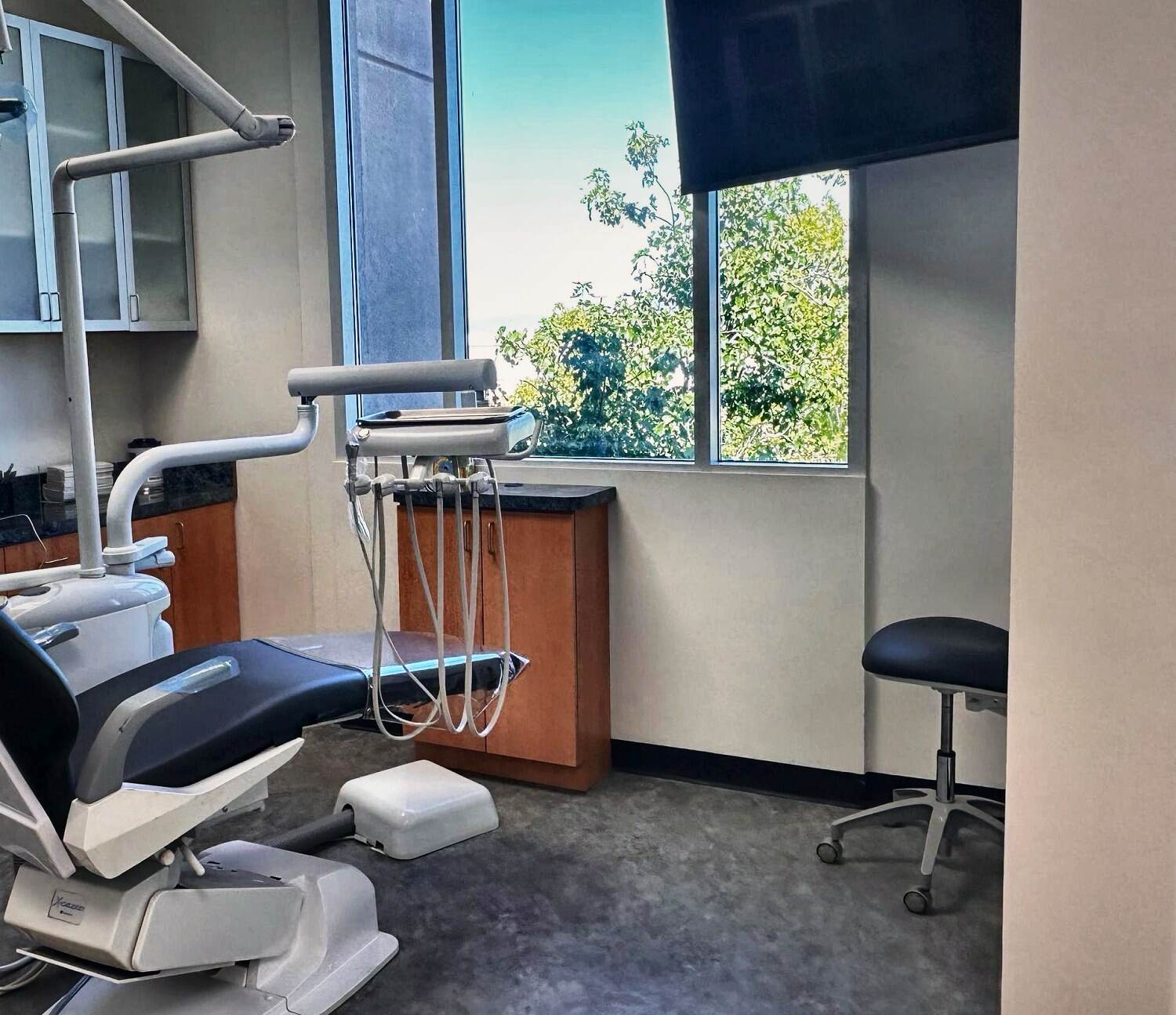
Root Canal Therapy
Gentle, microscope-guided treatment to relieve pain and save your tooth.
Inside every tooth is a soft core called the pulp, made up of nerves and blood vessels. When deep decay, a crack, or an injury lets bacteria reach the pulp, it becomes inflamed or infected. That is what causes the deep, lingering toothache many people know all too well. Left untreated, the infection can spread into the bone and the tooth is usually lost.
Root canal therapy treats the problem at its source. The inflamed or infected tissue is removed, the inside of the tooth is cleaned and disinfected, and the space is sealed to keep bacteria out. Your own tooth stays in place and keeps doing its job. As specialists who perform these treatments every day under a surgical microscope, we handle even the most complex canals with precision, and most patients tell us the visit felt no different from having a filling.
Signs you may need this
If any of these sound familiar, it's worth having the tooth evaluated. Early care usually means a simpler, more comfortable result.
Why see an endodontist for this
General dentists perform root canals, and plenty of them do it well. The difference is volume and focus. An endodontist spends two or more years in full-time training after dental school on nothing but the inside of the tooth, then treats these cases every working day for the rest of their career.
That shows up most on the teeth that are not straightforward: molars with four or five canals instead of three, roots that curve sharply near the tip, canals narrowed by years of calcification, and teeth that have hurt for months. It also shows up on the ordinary cases, where experience simply makes the visit faster and more comfortable.
You do not need a referral to be seen. Many patients come from their own dentist, and plenty call us directly because they are in pain and want the specialist first.
What this treatment does for you
Ends the pain
Removes the infected pulp that causes throbbing, pressure, and lingering sensitivity.
Saves the tooth
Keeps your natural tooth in place instead of extraction, an implant, or a bridge.
Microscope precision
Performed under high magnification so every canal is found, cleaned, and sealed.
Your visit, step by step
Diagnosis & 3D imaging
We confirm the diagnosis with an exam and 3D imaging that maps the tooth's canals before we begin.
Comfortable numbing
The area is fully numbed. Once you are comfortable, a thin protective sheet keeps the tooth clean and dry.
Clean & shape the canals
The inflamed tissue is removed and the canals are gently cleaned, disinfected, and shaped under the microscope.
Seal & protect
The canals are filled and sealed. A temporary or permanent filling closes the tooth.
Restore with your dentist
Your general dentist places the final restoration, often a crown, to protect the tooth for the long term.
What we use, and why it matters
The equipment is the reason modern endodontics looks nothing like its reputation.
Surgical operating microscope
High magnification with coaxial light, so canals, cracks, and calcified openings are seen rather than guessed at.
Cone beam 3D imaging
A focused, low-dose 3D scan that shows root anatomy and the surrounding bone in a way a flat x-ray cannot.
Rotary nickel-titanium files
Flexible instruments that follow the natural curve of a canal, shaping it gently instead of forcing it straight.
Electronic apex locators
Precise measurement of canal length so the cleaning and the seal stop exactly where the root ends.
Rubber dam isolation
A thin protective sheet that keeps the tooth clean and dry throughout and keeps everything else out of the way.
What happens afterwards, and when
A realistic timeline so you know what is normal and what is worth a phone call.
Same day
The numbness wears off over a few hours. Most people go back to work or school straight from the appointment.
Days 1 to 3
Mild tenderness when biting is normal, especially if the tooth was very sore beforehand. Over-the-counter pain relief handles it.
Week 1
Day-to-day discomfort has usually settled. Keep chewing on the other side until the final restoration is in place.
Weeks 2 to 4
See your general dentist for the permanent crown or filling. This step protects the tooth and should not be delayed.
6 to 12 months
A short review appointment and an x-ray confirm the bone at the root tip has healed as expected.
Aftercare & healing
A few simple steps help you heal comfortably and protect the result. We send you home with clear instructions and stay reachable if you have questions.
- Mild tenderness for a few days is normal and eases with over-the-counter pain relief.
- Avoid chewing hard foods on the tooth until the final restoration is placed.
- Keep up normal brushing and flossing; the tooth still needs care like any other.
- See your dentist promptly for the permanent crown or filling to protect the result.
What happens if it is left
An inflamed or infected pulp does not recover on its own. The pain often fades for a while once the nerve dies, which is why people talk themselves out of treatment, but the bacteria stay and keep spreading.
- Infection moves out of the root tip and into the surrounding bone, forming an abscess.
- Swelling can spread into the face and neck, which in rare cases becomes a medical emergency.
- The bone that holds the tooth is gradually lost, which complicates any future implant.
- The tooth usually becomes unrestorable and has to be extracted, turning a one-visit fix into an implant or bridge.
Cost & insurance
What a root canal costs depends on which tooth it is and how many canals it has. A front tooth is usually the most straightforward; a molar takes longer and costs more.
Most dental plans cover a meaningful share of endodontic treatment. Our team checks your coverage before you commit and gives you a written estimate, so you know the number in advance rather than at the front desk on the way out.
It is worth comparing the whole picture rather than one line item. Saving the tooth is almost always less expensive over time than extracting it and replacing it with an implant or a bridge.
We go through the estimate and your coverage with you before treatment starts, not after. If the number is a problem, say so and we will talk about options.
Ask about costCommon questions
Modern root canals relieve pain rather than cause it. With thorough numbing and magnification, most patients say the visit feels similar to having a routine filling.
Most root canals are completed in one or two visits, depending on the tooth and the number of canals. Front teeth are often quicker than molars.
Usually yes, especially on back teeth. A crown protects a treated tooth from fracture. Your general dentist places it after treatment.
Keeping your natural tooth is almost always the better choice when the tooth can be saved. Nothing functions quite like your own tooth, and replacements cost more over time.
Yes. A standard root canal uses local anesthetic, so you can drive and return to most normal activities the same day unless we arrange sedation.
Cost depends on the tooth and your insurance. We review the estimate and your coverage with you before treatment so there are no surprises.
In pain, or not sure if you need root canal therapy?
Request a visit and our team will help you figure out the next step. No referral needed to be seen.